Home
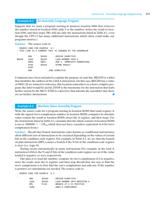
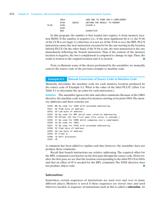
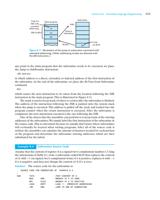
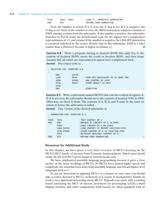
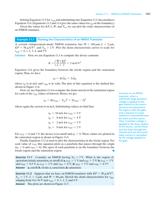
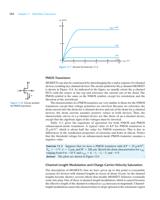
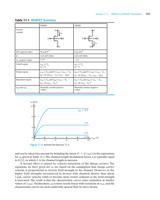
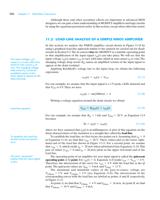
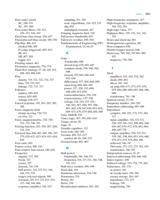
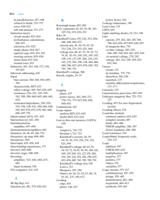
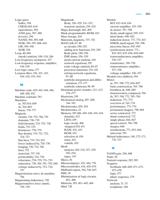
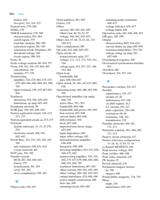
3D
PrintUP 3D Printer
PioCreat 3D Printer
Printers
FastCOLOUR >>
ATools
DTF Textile
UV-DTF
FlatPRINT
PrintExp
InkRIP
Lasers
TruCUT CO
2
>>
TruCUT RDWorks
TruCUT 2020+
TruCUT Express
TruCUT Lite >>
4030 & Vertical Software
4030 & Vertical Documents
New 6040 Desktop
LabelMark
RayCUT
MorCUT >>
MorCUT-Cyclops
LaserMaster
Plasmas
MetalWise
Fabricam
Routers
EasyRoute
PowerRoute
Blade Cutters
Vinyl Cutters >>
V-Series
V-Smart
V-Auto (& V-Smart+)
Vinyl4
Flatbed Cutters >>
FlatCUT
Label Cutters >>
V-Auto Label Cutters
Software >>
VinylCut
More
FastCUT
Heatware
Rollman
ScreenMaster
Other Software
Miscellaneous
AM.CO.ZA
/
Buy CNC Software
/
CNC Software Training
/
CNC Software Downloads
Sales: 072 222 2211
Support: 076 666 6655
Training: 060 818 1818
Jo’burg: 087 802 5368
Cape Town: 087 802 7106
An
Project
Multimedia
Univision Videos
#SortIT Videos
MakersLab.TV
Software Training
Welldone Gallery
Updates
Prevision Blog
Cornerstone Trust
Email Campaigns
Contact Us
Sales WhatsApp
060 600 6000
Support WhatsApp
060 600 7000
Johannesburg Headquarters
011 397 1429
087 802 5368
Cape Town Showroom
021 555 3250
087 802 7106
Links
CNC Machine Repair
Vinyl Cutter
Heatware
You are here:
AM.CO.ZA
Buythis
CNC Utilities Homepage
Miscellaneous
Electrical Engineering Principles and Applications (Global Edition).pdf
Page 18 of 82
18 993 of Electrical Engineering Principles and Applications (Page 18 / 894) Electrical Engineering Principles and Applications (Global Edition)
Home
3D
PrintUP 3D Printer
PioCreat 3D Printer
Printers
FastCOLOUR >>
ATools
DTF Textile
UV-DTF
FlatPRINT
PrintExp
InkRIP
Lasers
TruCUT CO
2
>>
TruCUT RDWorks
TruCUT 2020+
TruCUT Express
TruCUT Lite >>
4030 & Vertical Software
4030 & Vertical Documents
New 6040 Desktop
LabelMark
RayCUT
MorCUT >>
MorCUT-Cyclops
LaserMaster
Plasmas
MetalWise
Fabricam
Routers
EasyRoute
PowerRoute
Blade Cutters
Vinyl Cutters >>
V-Series
V-Smart
V-Auto (& V-Smart+)
Vinyl4
Flatbed Cutters >>
FlatCUT
Label Cutters >>
V-Auto Label Cutters
Software >>
VinylCut
More
FastCUT
Heatware
Rollman
ScreenMaster
Other Software
Miscellaneous
AM.CO.ZA
/
Buy CNC Software
/
CNC Software Training
/
CNC Software Downloads
Sales: 072 222 2211
Support: 076 666 6655
Training: 060 818 1818
Jo’burg: 087 802 5368
Cape Town: 087 802 7106
An
Project
Multimedia
Univision Videos
#SortIT Videos
MakersLab.TV
Software Training
Welldone Gallery
Updates
Prevision Blog
Cornerstone Trust
Email Campaigns
Contact Us
Sales WhatsApp
060 600 6000
Support WhatsApp
060 600 7000
Johannesburg Headquarters
011 397 1429
087 802 5368
Cape Town Showroom
021 555 3250
087 802 7106
Links
CNC Machine Repair
Vinyl Cutter
Heatware
You are here:
AM.CO.ZA
Buythis
CNC Utilities Homepage
Miscellaneous
Electrical Engineering Principles and Applications (Global Edition).pdf
Page 18 of 894
Page 18 / 993 of Electrical Engineering Principles and Applications (Global Edition)
Home
3D
PrintUP 3D Printer
PioCreat 3D Printer
Printers
FastCOLOUR >>
ATools
DTF Textile
UV-DTF
FlatPRINT
PrintExp
InkRIP
Lasers
TruCUT CO
2
>>
TruCUT RDWorks
TruCUT 2020+
TruCUT Express
TruCUT Lite >>
4030 & Vertical Software
4030 & Vertical Documents
New 6040 Desktop
LabelMark
RayCUT
MorCUT >>
MorCUT-Cyclops
LaserMaster
Plasmas
MetalWise
Fabricam
Routers
EasyRoute
PowerRoute
Blade Cutters
Vinyl Cutters >>
V-Series
V-Smart
V-Auto (& V-Smart+)
Vinyl4
Flatbed Cutters >>
FlatCUT
Label Cutters >>
V-Auto Label Cutters
Software >>
VinylCut
More
FastCUT
Heatware
Rollman
ScreenMaster
Other Software
Miscellaneous
AM.CO.ZA
/
Buy CNC Software
/
CNC Software Training
/
CNC Software Downloads
Sales: 072 222 2211
Support: 076 666 6655
Training: 060 818 1818
Jo’burg: 087 802 5368
Cape Town: 087 802 7106
An
Project
Multimedia
Univision Videos
#SortIT Videos
MakersLab.TV
Software Training
Welldone Gallery
Updates
Prevision Blog
Cornerstone Trust
Email Campaigns
Contact Us
Sales WhatsApp
060 600 6000
Support WhatsApp
060 600 7000
Johannesburg Headquarters
011 397 1429
087 802 5368
Cape Town Showroom
021 555 3250
087 802 7106
Links
CNC Machine Repair
Vinyl Cutter
Heatware
You are here:
AM.CO.ZA
Buythis
CNC Utilities Homepage
Miscellaneous
Electrical Engineering Principles and Applications (Global Edition).pdf
Page 18 of 894
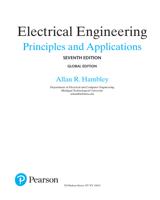
G
L
O
B
A
L
E
D
I
T
I
O
N
G
L
O
B
A
L
E
D
I
T
I
O
N
SEVENTH EDITION
Allan R. Hamble
y
Electrical Engineering
Pr
in
c
iples
an
d
Applicat
ions
Electrical Engineering
Pr
in
c
iples
an
d
Applicat
ions
G
L
O
B
A
L
E
D
I
T
I
O
N
Hamble
y
SEVENTH
EDITION
F
o
r
t
h
e
s
e
G
l
o
b
a
l
E
d
i
t
i
o
n
s
,
t
h
e
e
d
i
t
o
r
i
a
l
t
e
a
m
a
t
P
e
a
r
s
o
n
h
a
s
c
o
l
l
a
b
o
r
a
t
e
d
w
i
t
h
e
d
u
c
a
t
o
r
s
a
c
r
o
s
s
t
h
e
w
o
r
l
d
t
o
a
d
d
r
e
s
s
a
w
i
d
e
r
a
n
g
e
o
f
s
u
b
j
e
c
t
s
a
n
d
r
e
q
u
i
r
e
m
e
n
t
s
,
e
q
u
i
p
p
i
n
g
s
t
u
d
e
n
t
s
w
i
t
h
t
h
e
b
e
s
t
p
o
s
s
i
b
l
e
l
e
a
r
n
i
n
g
t
o
o
l
s
.
T
h
i
s
G
l
o
b
a
l
E
d
i
t
i
o
n
p
r
e
s
e
r
v
e
s
t
h
e
c
u
t
t
i
n
g
-
e
d
g
e
a
p
p
r
o
a
c
h
a
n
d
p
e
d
a
g
o
g
y
o
f
t
h
e
o
r
i
g
i
n
a
l
,
b
u
t
a
l
s
o
f
e
a
t
u
r
e
s
a
l
t
e
r
a
t
i
o
n
s
,
c
u
s
t
o
m
i
z
a
t
i
o
n
,
a
n
d
a
d
a
p
t
a
t
i
o
n
f
r
o
m
t
h
e
N
o
r
t
h
A
m
e
r
i
c
a
n
v
e
r
s
i
o
n
.
This is a special edition of an est
ablished title widel
y
used b
y colleges and univ
ersities thr
oughout the w
orld.
P
earson published this ex
clusiv
e edition f
or the benef
it
of students outside the Unit
ed St
at
es and Cana
da. If y
ou
pur
chased this book within the Unit
ed St
at
es or Cana
da,
y
ou should be a
war
e that it has been impor
t
ed without
the a
ppr
o
val of the Publisher or Author
.
P
earson Global Edition
Hambley_07_129222312X_Final.indd 1
23/02/18 7:13 AM
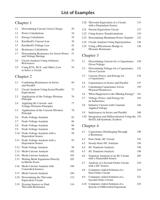
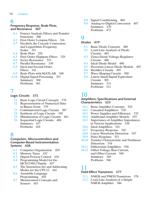
Chapter 1
1
.1
Determining Curr
ent Given Char
ge
29
1
.2
P
ower Calculations
34
1
.3
Ener
gy Calculation
35
1
.4
Kir
chhof
f
’
s Curr
ent L
a
w
38
1
.5
Kir
chhof
f
’
s
V
oltage
L
a
w
42
1
.6
R
esistance Calculation
49
1
.7
Determining R
esistance for Given P
ower
andV
oltage R
atings
51
1
.8
Cir
cuit
Analysis
Using
Arbitr
ary
R
efer
ences
53
1
.9
Using KVL,
KCL,
and Ohm’
s L
a
w
to Solve a Cir
cuit
54
Chapter 2
2.1
Combining R
esistances in Series
and P
ar
allel
69
2.2
Cir
cuit
Analysis Using Series/P
ar
allel
Equiv
alents
72
2.3
Application of the
V
oltage-Division
Principle
76
2.4
Applying the Curr
ent- and
V
oltage-Division Principles
77
2.5
Application of the Curr
ent-Division
Principle
78
2.6
Node-V
oltage
Analysis
83
2.7
Node-V
oltage
Analysis
86
2.8
Node-V
oltage
Analysis
88
2.9
Node-V
oltage
Analysis
90
2.10
Node-V
oltage
Analysis with a
Dependent Sour
ce
94
2.11
Node-V
oltage
Analysis with a
Dependent Sour
ce
95
2.12
Node
V
oltage
Analysis
96
2.13
Mesh-Curr
ent
Analysis
102
2.1
4
Mesh-Curr
ent
Analysis
103
2.1
5
W
riting Mesh Equations Dir
ectly
in Matrix F
orm
105
2.1
6
Mesh-Curr
ent
Analysis
with
Contr
olled Sour
ces
108
2.1
7
Mesh
Curr
ent
Analysis
109
2.1
8
Determining
the
T
hévenin
Equiv
alent Cir
cuit
112
2.1
9
Zer
oing Sour
ces to F
ind
T
hévenin R
esistance
1
1
4
List of Examples
2.20
T
hévenin Equiv
alent of a Cir
cuit
with a Dependent Sour
ce
1
1
5
2.21
Norton Equiv
alent Cir
cuit
11
7
2.22
Using
Sour
ce
T
r
ansformations
11
9
2.23
Determining Maximum P
ower
T
r
ansfer
122
2.24
Cir
cuit
Analysis Using Superposition
126
2.25
Using a
W
heatstone Bridge to
Measur
e R
esistance
128
Chapter 3
3.1
Determining Curr
ent for a Capacitance
Given
V
oltage
1
5
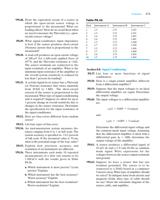
0
3.2
Determining
V
oltage for a Capacitance
Given Curr
ent
1
5
2
3.3
Curr
ent,
P
ower
,
and Ener
gy for
a Capacitance
1
5
4
3.4
Capacitances in Series and P
ar
allel
1
57
3.5
Calculating Capacitance Given
Physical P
ar
ameters
1
5
9
3.6
W
hat Happened to the Missing Ener
gy?
1
61
3.7
V
oltage
,
P
ower
,
and Ener
gy for
an Inductance
1
6
5
3.8
Inductor Curr
ent with Constant
Applied
V
oltage
1
6
6
3.9
Inductances in Series and P
ar
allel
1
68
3.10
Integr
ation and Dif
fer
entiation Using the
MA
TL
AB
S
ymbolic
T
oolbox
1
7
4
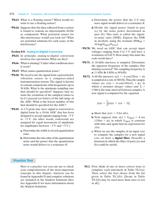
Chapter 4
4.1
Capacitance
Dischar
ging
T
hr
ough
a R
esistance
1
9
0
4.2
F
irst-Or
der
R
C
Cir
cuit
1
92
4.3
Steady
-State
DC
Analysis
1
94
4.4
RL
T
r
ansient
Analysis
1
96
4.5
RL
T
r
ansient
Analysis
1
98
4.6
T
r
ansient
Analysis of an
R
C
Cir
cuit
with a Sinusoidal Sour
ce
203
4.7
Analysis of a Second-Or
der Cir
cuit
with a DC Sour
ce
210
4.8
Computer
-Aided Solution of a
F
irst-Or
der Cir
cuit
2
1
9
4.9
Computer
-Aided Solution of a
Second-Or
der Cir
cuit
221
4.10
Computer
-Aided Solution of a
S
ystem of Dif
fer
ential Equations
223
CVR_HAMB3124_07_GE_IFC.indd 1
10/03/2018 12:20
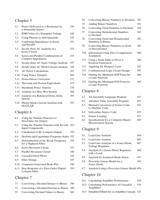
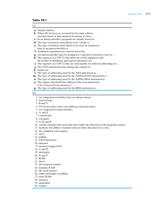
Chapter 5
5.1
P
ower Deliver
ed to a R
esistance by
a Sinusoidal Sour
ce
239
5.2
RMS
V
alue
of
a
T
riangular
V
oltage
240
5.3
Using Phasors to
A
dd Sinusoids
245
5.4
Combining Impedances in Series
and P
ar
allel
251
5.5
Steady
-State
A
C
Analysis
of
a
Series Cir
cuit
253
5.6
Series and P
ar
allel Combinations of
Complex Impedances
255
5.7
Steady
-State
A
C
Node-V
oltage
Analysis
257
5.8
Steady
-State
A
C
Mesh-Curr
ent
Analysis
258
5.9
A
C P
ower Calculations
267
5.10
Using
P
ower
T
riangles
269
5.11
P
ower
-F
actor Corr
ection
271
5.12
T
hévenin and Norton Equiv
alents
273
5.13
Maximum
P
ower
T
r
ansfer
276
5.1
4
Analysis of a
W
ye-W
ye S
ystem
284
5.1
5
Analysis of a B
alanced Delta–Delta
S
ystem
287
5.1
6
Phasor Mesh-Curr
ent
Analysis with
MA
TL
AB
292
Chapter 6
6.1
Using the
T
r
ansfer F
unction to
Determine the Output
311
6.2
Using the
T
r
ansfer F
unction with Sever
al
Input Components
313
6.3
Calculation of
R
C
Lowpass Output
31
9
6
.
4
D
e
c
i
b
e
l
s
a
n
d
L
o
g
a
r
i
t
h
m
i
c
F
r
e
q
u
e
n
c
y
S
c
a
l
e
s
3
2
5
6.5
Determination of the Br
eak F
r
equenc
y
for a Highpass F
ilter
332
6.6
Series R
esonant Cir
cuit
337
6.7
P
ar
allel R
esonant Cir
cuit
340
6.8
Cascaded Ideal F
ilters
342
6.9
F
ilter Design
347
6.10
Computer
-Gener
ated Bode Plot
348
6.11
Step R
esponse of a F
irst-Or
der Digital
Lowpass F
ilter
354
Chapter 7
7
.1
Con
verting a Decimal Integer to Binary
380
7
.2
Con
verting a Decimal F
r
action to Binary
380
7
.3
Con
verting Decimal
V
alues to Binary
381
7
.4
Con
verting Binary Numbers to Decimal
381
7
.5
A
dding Binary Numbers
381
7
.6
Con
verting Octal Numbers to Decimal
382
7
.7
Con
verting Hexadecimal Numbers
to Decimal
382
7
.8
Con
verting Octal and Hexadecimal
Numbers to Binary
382
7
.9
Con
verting Binary Numbers to Octal
or Hexadecimal
383
7
.10
Subtr
action
Using
T
wo
’
s-Complement
Arithmetic
386
7
.11
Using a
T
ruth
T
able to Pr
ove a
Boolean Expr
ession
390
7
.12
Applying De Mor
gan
’
s L
a
ws
393
7
.13
Combinatorial Logic Cir
cuit Design
397
7
.1
4
F
inding the Minimum SOP F
orm for
a Logic F
unction
404
7
.1
5
F
inding the Minimum POS F
orm for
a Logic F
unction
405
Chapter 8
8.1
An
Assembly
-L
anguage
Pr
ogr
am
451
8.2
Absolute
V
alue
Assembly
Pr
ogr
am
451
8.3
Manual Con
version of Sour
ce Code
to Machine Code
452
8.4
Subr
outine Sour
ce Code
453
8.5
Sensor Loading
457
8.6
Specications for a Computer
-B
ased
Measur
ement S
ystem
469
Chapter 9
9.1
Load-Line
Analysis
484
9.2
Load-Line
Analysis
485
9.3
Load-Line
Analysis of a Zener
-Diode
V
oltage R
egulator
487
9.4
Analysis of a Zener
-Diode R
egulator
with a Load
488
9.5
Analysis by
Assumed Diode States
491
9.6
Piecewise-Linear Model for a
Zener Diode
493
9.7
Analysis Using a Piecewise-Linear Model
494
Chapter 10
10.1
Calculating
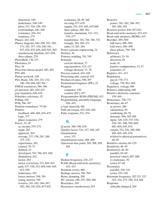
Amplier
P
erformance
528
10.2
Calculating P
erformance of Cascaded
Ampliers
530
1
0
.
3
S
i
m
p
l
i
e
d
M
o
d
e
l
f
o
r
a
n
A
m
p
l
i
e
r
C
a
s
c
a
d
e
5
3
1
A01_HAMB3124_07_GE_FM.indd 1
10/03/2018 12:18
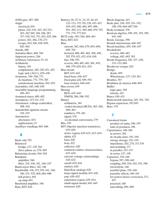
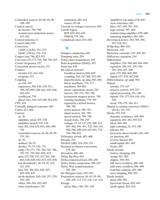
13.7
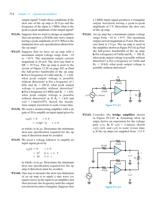
Determining
W
orst-Case DC Output
693
13.8
Lowpass
A
ctive F
ilter Design
703
Chapter 1
4
1
4.1
Magnetic F
ield ar
ound a Long
Str
aight
W
ir
e
725
1
4.2
Flux Density in a
T
or
oidal Cor
e
726
1
4.3
Flux and Flux Linkages for a
T
or
oidal Cor
e
727
1
4.4
T
he
T
or
oidal Coil as a Magnetic Cir
cuit
729
1
4.5
A Magnetic Cir
cuit with an
Air Gap
729
1
4.6
A Magnetic Cir
cuit with R
eluctances
in Series and P
ar
allel
731
1
4.7
Calculation of Inductance
734
1
4.8
Calculation of Inductance and
Mutual Inductance
736
1
4.9
Determination of R
equir
ed
T
urns R
atio
7
42
1
4.10
Analysis of a Cir
cuit Containing an Ideal
T
r
ansformer
7
4
4
1
4.11
Using
Impedance
T
r
ansformations
7
46
1
4.12
R
eecting the Sour
ce to the Secondary
7
47
1
4.13
R
egulation and Ef
cienc
y Calculations
750
Chapter 1
5
1
5.1
Motor P
erformance Calculations
772
1
5.2
Idealized Linear Machine
775
1
5.3
DC Machine P
erformance Calculations
784
1
5.4
Shunt-Connected DC Motor
787
1
5.5
Series-Connected DC Motor
792
1
5.6
Separ
ately Excited DC Gener
ator
80
1
Chapter 1
6
1
6.1
Induction-Motor P
erformance
826
1
6.2
Starting Curr
ent and
T
orque
829
1
6.3
Induction-Motor P
erformance
830
1
6.4
S
ynchr
onous-Motor P
erformance
838
1
6.5
P
ower
-F
actor Contr
ol
840
Appendix
A
A
.
1
C
o
m
p
l
e
x
A
r
i
t
h
m
e
t
i
c
i
n
R
e
c
t
a
n
g
u
l
a
r
F
o
r
m
8
5
7
A.2
P
olar
-to-R
ectangular Con
version
858
A.3
R
ectangular
-to-P
olar Con
version
859
A
.
4
E
x
p
o
n
e
n
t
i
a
l
F
o
r
m
o
f
a
C
o
m
p
l
e
x
N
u
m
b
e
r
8
6
1
A.5
Complex
Arithmetic in P
olar F
orm
862
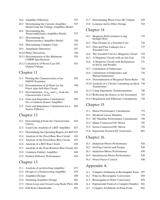
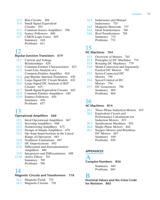
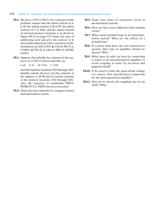
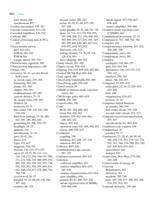
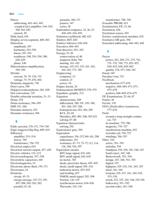
10.4
Amplier Ef
cienc
y
533
10.5
Determining the Curr
ent-Amplier
Model fr
om the
V
oltage-Amplier Model
535
10.6
Determining the
T
r
ansconductance-Amplier Model
537
10.7
Determining the
T
r
ansr
esistance-Amplier Model
538
10.8
Determining Complex Gain
543
10.9
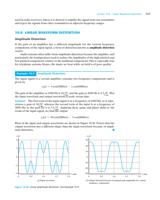
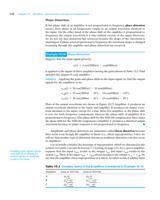
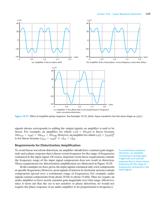
Amplitude Distortion
547
10.10
Phase Distortion
548
10.11
Determination of the Minimum
CMRR Specication
559
10.12
Calculation of
W
orst-Case DC
Output
V
oltage
563
Chapter 11
11
.1
Plot
ting the Char
acteristics of an
NMOS
T
r
ansistor
583
11
.2
Determination of
Q
P
oint for the
F
ixed- plus Self-Bias Cir
cuit
590
11
.3
Determination of
g
m
and
r
d
fr
om the
Char
acteristic Curves
595
11
.4
Gain and Impedance Calculations
for a Common-Sour
ce
Amplier
599
11
.5
Gain and Impedance Calculations for a
Sour
ce F
ollower
603
Chapter 12
12.1
Determining
b
fr
om the Char
acteristic
Curves
624
12.2
Load-Line
Analysis of a BJT
Amplier
627
1
2
.
3
D
e
t
e
r
m
i
n
i
n
g
t
h
e
O
p
e
r
a
t
i
n
g
R
e
g
i
o
n
o
f
a
B
J
T
6
3
5
12.4
Analysis of the F
ixed B
ase Bias Cir
cuit
636
12.5
Analysis of the F
ixed B
ase Bias Cir
cuit
637
12.6
Analysis of a BJT Bias Cir
cuit
638
12.7
Analysis of the F
our
-R
esistor Bias Cir
cuit
641
12.8
Common-Emit
ter
Amplier
648
12.9
Emit
ter
-F
ollower P
erformance
654
Chapter 13
13.1
Analysis of an In
verting
Amplier
671
13.2
Design of a Nonin
verting
Amplier
679
13.3
Amplier Design
680
13.4
Summing
Amplier
Design
681
13.5
Open-Loop and Closed-Loop Bode Plots
686
13.6
F
ull-P
ower B
andwidth
691
A01_HAMB3124_07_GE_FM.indd 2
10/03/2018 12:18
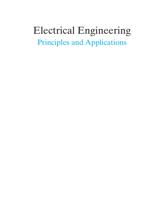
Electrical Engineering
Principles
and
Applications
A01_HAMB3124_07_GE_FM.indd 3
10/03/2018 12:18
A01_GIPE3898_09_SE_FM.indd 3
12/20/17 5:56 PM
This page intentionally left blank
Electrical Engineering
Principles
and
Applications
Seventh
e
dition
Gl
ob
al
e
dition
Allan R.
Hambley
Department of Electrical and Computer Engineering
Michigan
T
echnological
University
arhamble@mtu.edu
330 Hudson Str
eet,
NY NY 10
0
13
A01_HAMB3124_07_GE_FM.indd 5
10/03/2018 12:18
MA
TL
AB is a r
egister
ed tr
ademark of
T
he MathW
orks
,
Inc
.
Company and pr
oduct names mentioned her
ein ar
e the
tr
ademarks or r
egister
ed tr
ademarks of their r
espective owners
.
P
earson Education Limited
KA
O
T
wo
KA
O P
ark
Harlow
CM1
7 9N
A
United Kingdom
and
Associated Companies thr
oughout the world
V
isit us on the
W
orld
W
ide
W
eb at
:
www
.pearsonglobaleditions
.com
© P
earson Education Limited 20
1
9
T
he
rights
of
Allan
R.
Hambley
to
be
identified
as
the
author
of
this
work
ha
ve
been
asserted
by
him
in
accor
dance
with
the
Copyright,
Designs and P
atents
A
ct 1
988.
A
uthoriz
ed
adaptation
fr
om
the
United
States
edition,
entitled
Electrical
Engineering:
Principles
and
Applications
,
7
th
Edition,
ISBN 978-0-13-44841
4-3 b
y
Allan R.
Hambley
,
published b
y P
earson Education © 201
8.
All
rights
r
eserved.
No
part
of
this
publication
ma
y
be
r
epr
oduced,
stor
ed
in
a
r
etriev
al
system,
or
tr
ansmit
ted
in
any
form
or
by
any
means
,
electr
onic
,
mechanical,
photocopying
,
r
ecor
ding
or
otherwise
,
without
either
the
prior
writ
ten
permission
of
the
publisher
or
a
license
permit
ting
r
estricted
copying
in
the
United
Kingdom
issued
by
the
Copyright
Licensing
Agenc
y
Ltd,
Saf
fr
on House
,
6–10 Kirby Str
eet,
London EC1N 8TS
.
All
tr
ademarks
used
her
ein
ar
e
the
pr
operty
of
their
r
espective
owners
.
T
he
use
of
any
tr
ademark
in
this
text
does
not
vest
in
the
author
or
publisher
any
tr
ademark
ownership
rights
in
such
tr
ademarks
,
nor
does
the
use
of
such
tr
ademarks
imply
any
af
filiation with or endorsement of this book by such owners
.
British Library Cataloguing-in-Public
ation Data
A catalogue r
ecor
d for this book is a
v
ailable fr
om the British Libr
ary
10 9 8 7 6 5 4 3 2 1
T
ypeset by SPi Global®
ISBN 10:
1
-292-22312-X
Printed and bound by
V
iv
ar in Mala
ysia
ISBN 13:
978-1
-292-22312-4
V
ice Pr
esident and Editorial Dir
ector
,
ECS:
Mar
cia J
.
Horton
Editor
-in-Chief:
J
ulian P
artridge
P
ortfolio Manager:
J
ulie B
ai
P
ortfolio Manager
Assistant:
Michelle B
a
yman
A
cquisitions Editor
,
Global Edition:
Sour
abh Maheshwari
Executive Mark
eting Manager:
T
im Galligan
Dir
ector of Mark
eting:
Christy Lesk
o
F
ield Mark
eting Manager:
Demetrius Hall
Mark
eting
Assistant:
J
on Bryant
Managing Content Pr
oducer:
Scot
t Disanno
Pr
oject Editor
,
Global Edition:
K.K.
Neelakantan
Global HE Dir
ector of
V
endor Sour
cing and
Pr
ocur
ement:
Diane Hynes
Dir
ector of Oper
ations:
Nick Sklitsis
Oper
ations Specialist:
Maur
a Zaldiv
ar
-Gar
cia
Senior Manufacturing Contr
oller
,
Global Edition:
Angela
Ha
wksbee
Manager
,
Media Pr
oduction,
Global Edition:
V
ikr
am K
umar
Cr
eative Dir
ector:
Blair Br
own
Cover Design:
Lumina D
atamatics
,
Inc
.
Cover Image:
alexfan32 / Shut
terstock
Manager
,
Rights and P
ermissions:
Ben F
errini
F
ull-Service Pr
oject Management:
SPi Global/Shylaja
Gat
tupalli
A01_HAMB3124_07_GE_FM.indd 6
10/03/2018 12:18
T
o my family J
udy
,
T
ony
,
P
am,
and Mason
and to my special friend,
Car
ol
A01_HAMB3124_07_GE_FM.indd 7
10/03/2018 12:18
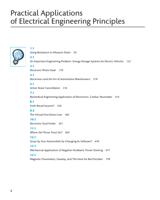
Pr
actical Applications
of El
ectr
ical Engineer
ing Pr
incipl
es
1
.
1
Using R
esis
t
ance t
o Measur
e S
tr
ain
50
2
.
1
An Im
por
t
ant Engineer
ing Pr
obl
em: Ener
gy
-S
t
or
ag
e Sy
s
t
ems f
or El
ectr
ic V
ehic
l
es
122
3
.
1
El
ectr
onic Pho
t
o Flash
170
4
.
1
El
ectr
onics and t
he Ar
t of Aut
omo
tiv
e Maint
enance
218
6
.
1
A
ctiv
e Noise Cancel
lation
316
7
.
1
Biomedical Engineer
ing Application of El
ectr
onics: Car
diac P
acemak
er
414
8
.
1
F
r
esh Br
ead An
y
one?
436
8.2
The V
ir
tual F
ir
s
t-Down Line
465
10.
1
El
ectr
onic S
tud F
inder
561
11.
1
Wher
e
Did
Those T
r
out Go?
605
12.
1
Soup U
p Y
our Aut
omobil
e b
y Changing Its Sof
tw
ar
e?
630
13.
1
Mec
hanical Application of Neg
ativ
e F
eedbac
k: P
ow
er S
t
eer
ing
677
15.
1
Magne
tic Flowme
t
er
s, F
ar
ada
y
, and The Hunt f
or R
ed Oct
ober
778
8
A01_HAMB3124_07_GE_FM.indd 8
10/03/2018 12:18
"
Do you need help?
Call Me Back
"
Do you need help?
Call Me Back
"
Do you need help?
Call Me Back