Home
3D
PrintUP 3D Printer
PioCreat 3D Printer
Printers
FastCOLOUR >>
ATools
DTF Textile
UV-DTF
FlatPRINT
PrintExp
InkRIP
Lasers
TruCUT CO
2
>>
TruCUT RDWorks
TruCUT 2020+
TruCUT Express
TruCUT Lite >>
4030 & Vertical Software
4030 & Vertical Documents
New 6040 Desktop
LabelMark
RayCUT
MorCUT >>
MorCUT-Cyclops
LaserMaster
Plasmas
MetalWise
Fabricam
Routers
EasyRoute
PowerRoute
Blade Cutters
Vinyl Cutters >>
V-Series
V-Smart
V-Auto (& V-Smart+)
Vinyl4
Flatbed Cutters >>
FlatCUT
Label Cutters >>
V-Auto Label Cutters
Software >>
VinylCut
More
FastCUT
Heatware
Rollman
ScreenMaster
Other Software
Miscellaneous
AM.CO.ZA
/
Buy CNC Software
/
CNC Software Training
/
CNC Software Downloads
Sales: 072 222 2211
Support: 076 666 6655
Training: 060 818 1818
Jo’burg: 087 802 5368
Cape Town: 087 802 7106
An
Project
Multimedia
Univision Videos
#SortIT Videos
MakersLab.TV
Software Training
Welldone Gallery
Updates
Prevision Blog
Cornerstone Trust
Email Campaigns
Contact Us
Sales WhatsApp
060 600 6000
Support WhatsApp
060 600 7000
Johannesburg Headquarters
011 397 1429
087 802 5368
Cape Town Showroom
021 555 3250
087 802 7106
Links
CNC Machine Repair
Vinyl Cutter
Heatware
You are here:
AM.CO.ZA
Buythis
CNC Utilities Homepage
Miscellaneous
Fundamentals of Electric Circuits (7th Edition) by Charles Alexander.pdf
Page 16 of 17
Page 16 / 993 of Fundamentals of Electric Circuits (7th Edition) by Charles Alexander
Home
3D
PrintUP 3D Printer
PioCreat 3D Printer
Printers
FastCOLOUR >>
ATools
DTF Textile
UV-DTF
FlatPRINT
PrintExp
InkRIP
Lasers
TruCUT CO
2
>>
TruCUT RDWorks
TruCUT 2020+
TruCUT Express
TruCUT Lite >>
4030 & Vertical Software
4030 & Vertical Documents
New 6040 Desktop
LabelMark
RayCUT
MorCUT >>
MorCUT-Cyclops
LaserMaster
Plasmas
MetalWise
Fabricam
Routers
EasyRoute
PowerRoute
Blade Cutters
Vinyl Cutters >>
V-Series
V-Smart
V-Auto (& V-Smart+)
Vinyl4
Flatbed Cutters >>
FlatCUT
Label Cutters >>
V-Auto Label Cutters
Software >>
VinylCut
More
FastCUT
Heatware
Rollman
ScreenMaster
Other Software
Miscellaneous
AM.CO.ZA
/
Buy CNC Software
/
CNC Software Training
/
CNC Software Downloads
Sales: 072 222 2211
Support: 076 666 6655
Training: 060 818 1818
Jo’burg: 087 802 5368
Cape Town: 087 802 7106
An
Project
Multimedia
Univision Videos
#SortIT Videos
MakersLab.TV
Software Training
Welldone Gallery
Updates
Prevision Blog
Cornerstone Trust
Email Campaigns
Contact Us
Sales WhatsApp
060 600 6000
Support WhatsApp
060 600 7000
Johannesburg Headquarters
011 397 1429
087 802 5368
Cape Town Showroom
021 555 3250
087 802 7106
Links
CNC Machine Repair
Vinyl Cutter
Heatware
You are here:
AM.CO.ZA
Buythis
CNC Utilities Homepage
Miscellaneous
Fundamentals of Electric Circuits (7th Edition) by Charles Alexander.pdf
Page 16 of 993
E
L
E
C
T
R
I
C
C
I
R
C
U
I
T
S
F
u
n
d
a
m
e
n
t
a
l
s
o
f
S
e
v
e
n
t
h
E
d
i
t
i
o
n
C
h
a
r
l
e
s
A
l
e
x
a
n
d
e
r
M
a
t
t
h
e
w
S
a
d
i
k
u
This International S
tudent Edition is for use outside of the U
.S.
E
L
E
C
T
R
I
C
C
I
R
C
U
I
T
S
F
u
n
d
a
m
e
n
t
a
l
s
o
f
S
e
v
e
n
t
h
E
d
i
t
i
o
n
C
h
a
r
l
e
s
A
l
e
x
a
n
d
e
r
M
a
t
t
h
e
w
S
a
d
i
k
u
s
e
v
e
n
t
h
e
d
i
t
i
o
n
Fundamentals
of
Electric
Circuits
Charles
K.
Alexander
Professor
Emeritus
of
Electrical
Engineering
and
Computer
Science
Cleveland
State
University
Mahew
N.
O.
Sadiku
Department
of
Electrical
and
Computer
Engineering
Prairie
View
A&M
University
FUNDAMENTALS
OF
ELECTRIC
CIRCUITS
P
u
b
l
i
s
h
e
d
b
y
M
c
G
r
a
w
-
H
i
l
l
E
d
u
c
a
t
i
o
n
,
2
P
e
n
n
P
l
a
z
a
,
N
e
w
Y
o
r
k
,
N
Y
1
0
1
2
1
.
C
o
p
y
r
i
g
h
t
©
2
0
2
1
b
y
M
c
G
r
a
w
-
H
i
l
l
E
d
u
c
a
t
i
o
n
.
A
l
l
r
i
g
h
t
s
r
e
s
e
r
v
e
d
.
P
r
i
n
t
e
d
i
n
t
h
e
U
n
i
t
e
d
S
t
a
t
e
s
o
f
A
m
e
r
i
c
a
.
N
o
p
a
r
t
o
f
t
h
i
s
p
u
b
l
i
c
a
t
i
o
n
m
a
y
b
e
r
e
p
r
o
d
u
c
e
d
o
r
d
i
st
r
i
b
u
t
e
d
i
n
a
n
y
f
o
r
m
o
r
b
y
a
n
y
m
e
a
n
s
,
o
r
st
o
r
e
d
i
n
a
d
a
t
a
b
a
s
e
o
r
r
e
t
r
i
e
v
a
l
sy
st
e
m
,
w
i
t
h
o
u
t
t
h
e
p
r
i
o
r
w
r
i
t
t
e
n
c
o
n
s
e
n
t
o
f
M
c
G
r
a
w
-
H
i
l
l
E
d
u
c
a
t
i
o
n
,
i
n
c
l
u
d
i
n
g
,
b
u
t
n
o
t
l
i
m
i
t
e
d
t
o
,
i
n
a
n
y
n
e
t
w
o
r
k
o
r
o
t
h
e
r
e
l
e
c
t
r
o
n
i
c
st
o
r
a
g
e
o
r
t
r
a
n
s
m
i
s
s
i
o
n
,
o
r
b
r
o
a
d
c
a
st
f
o
r
d
i
st
a
n
c
e
l
e
a
r
n
i
n
g
.
S
o
m
e
a
n
c
i
l
l
a
r
i
e
s
,
i
n
c
l
u
d
i
n
g
e
l
e
c
t
r
o
n
i
c
a
n
d
p
r
i
n
t
c
o
m
p
o
n
e
n
t
s
,
m
a
y
n
o
t
b
e
a
v
a
i
l
a
b
l
e
t
o
c
u
st
o
m
e
r
s
o
u
t
s
i
d
e
t
h
e
U
n
i
t
e
d
S
t
a
t
e
s.
T
h
i
s
b
o
ok
i
s
p
r
i
n
t
e
d
o
n
a
c
i
d
-
f
r
e
e
p
a
p
e
r
.
1
2
3
4
5
6
7
8
9
L
W
I
2
4
2
3
2
2
2
1
2
0
I
S
B
N
9
7
8
-
1
-
2
6
0
-
5
7
0
7
9
-
3
M
H
I
D
1
-
2
6
0
-
5
7
0
7
9
-
7
C
o
v
e
r
I
m
a
g
e
:
N
A
S
A
,
E
S
A
,
a
n
d
M
.
L
i
v
i
o
a
n
d
T
h
e
H
u
b
b
l
e
2
0
t
h
A
n
n
i
v
er
s
a
r
y
T
e
a
m
(
S
T
S
c
I
)
A
l
l
c
r
e
d
i
t
s
a
p
p
e
a
r
i
n
g
o
n
p
a
g
e
o
r
a
t
t
h
e
e
n
d
o
f
t
h
e
b
o
ok
a
r
e
c
o
n
s
i
d
e
r
e
d
t
o
b
e
a
n
e
x
t
e
n
s
i
o
n
o
f
t
h
e
c
o
p
y
r
i
g
h
t
p
a
g
e
.
T
h
e
I
n
t
e
r
n
e
t
a
d
d
r
e
s
s
e
s
l
i
st
e
d
i
n
t
h
e
t
e
x
t
w
e
r
e
a
c
c
u
r
a
t
e
a
t
t
h
e
t
i
m
e
o
f
p
u
b
l
i
c
a
t
i
o
n
.
T
h
e
i
n
c
l
u
s
i
o
n
o
f
a
w
e
b
s
i
t
e
d
o
e
s
n
o
t
i
n
d
i
c
a
t
e
a
n
e
n
d
o
r
s
e
m
e
n
t
b
y
t
h
e
a
u
t
h
o
r
s
o
r
M
c
G
r
a
w
-
H
i
l
l
E
d
u
c
a
t
i
o
n
,
a
n
d
M
c
G
r
a
w
-
H
i
l
l
E
d
u
c
a
t
i
o
n
d
o
e
s
n
o
t
g
u
a
r
a
n
t
e
e
t
h
e
a
c
c
u
r
a
cy
o
f
t
h
e
i
n
f
o
r
m
a
t
i
o
n
p
r
e
s
e
n
t
e
d
a
t
t
h
e
s
e
s
i
t
e
s.
m
h
e
d
u
c
a
t
i
o
n
.
c
o
m
/
h
i
g
h
e
r
e
d
Dedicated
to
our
wives,
Kikelomo
and
Hannah,
whose
understanding
and
support
have
truly
made
this
book
possible.
Mahew
and
Chuck
v
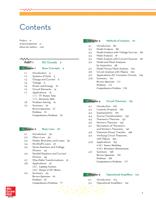
Contents
Preface
xi
Acknowledgments
xv
About the Authors
xxiii
PART 1
DC Circuits
2
Chapter 1
Basic Concepts
3
1.1
Introduction
4
1.2
Systems of Units
5
1.3
Charge and Current
6
1.4
Voltage
9
1.5
Power and Energy
10
1.6
Circuit Elements
14
1.7
Applications
16
1.7.1
TV
Picture
Tube
1.7.2
Electricity
Bills
1.8
Problem Solving
19
1.9
Summary
22
Review
Questions
23
Problems
24
Comprehensive
Problems
26
Chapter 2
Basic Laws
29
2.1
Introduction
30
2.2
Ohm’s Law
30
2.3
Nodes, Branches, and Loops
35
2.4
Kirchho’s Laws
37
2.5
Series Resistors and Voltage
Division
43
2.6
Parallel Resistors and Current
Division
44
2.7
Wye-Delta Transformations
51
2.8
Applications
57
2.8.1
Lighting
Systems
2.8.2
Design
of
DC
Meters
2.9
Summary
63
Review Questions
64
Problems
65
Comprehensive Problems
77
v
Chapter 3
Methods of Analysis
79
3.1
Introduction
80
3.2
Nodal Analysis
80
3.3
Nodal
Analysis
with
Voltage
Sources
86
3.4
Mesh Analysis
91
3.5
Mesh Analysis with Current Sources
96
3.6
Nodal and Mesh Analyses
by Inspection
98
3.7
Nodal Versus Mesh Analysis
102
3.8
Circuit Analysis with
PSpice
103
3
.
9
A
p
p
l
i
c
a
t
i
o
n
s
:
D
C
T
r
a
n
s
i
s
t
o
r
C
i
r
c
u
i
t
s
1
0
5
3.10
Summary
110
Review Questions
111
Problems
112
Comprehensive Problem
124
Chapter 4
Circuit Theorems
125
4.1
Introduction
126
4.2
Linearity Property
126
4.3
Superposition
129
4.4
Source Transformation
133
4.5
Thevenin’s Theorem
137
4.6
Norton’s Theorem
143
4.7
Derivations of Thevenin’s
and Norton’s Theorems
147
4.8
Maximum Power Transfer
148
4.9
Verifying Circuit Theorems
with
PSpice
150
4.10
Applications
153
4.10.1
Source
Modeling
4.10.2
Resistance
Measurement
4.11
Summary
158
Review Questions
159
Problems
160
Comprehensive Problems
171
Chapter 5
Operational Ampliers
173
5.1
Introduction
174
5.2
Operational Ampliers
174
vi
Contents
5.3
Ideal Op Amp
178
5.4
Inverting Amplier
179
5.5
Noninverting Amplier
181
5.6
Summing Amplier
183
5.7
Dierence Amplier
185
5.8
Cascaded Op Amp Circuits
189
5.9
Op
Amp
Circuit
Analysis
with
PSpice
192
5.10
Applications
194
5.10.1
Digital-to-Analog
Converter
5.10.2
Instrumentation
Amplifiers
5.11
Summary
197
Review Questions
199
Problems
200
Comprehensive Problems
211
Chapter 6
Capacitors and Inductors
213
6.1
Introduction
214
6.2
Capacitors
214
6.3
Series and Parallel Capacitors
220
6.4
Inductors
224
6.5
Series and Parallel Inductors
228
6.6
Applications
231
6.6.1
Integrator
6.6.2
Differentiator
6.6.3
Analog
Computer
6.7
Summary
238
Review Questions
239
Problems
240
Comprehensive Problems
249
Chapter 7
First-Order Circuits251
7.1
Introduction
252
7.2
The Source-Free
RC
Circuit
253
7.3
The Source-Free
RL
Circuit
257
7.4
Singularity Functions
263
7.5
Step Response of an
RC
Circuit
271
7.6
Step Response of an
RL
Circuit
278
7.7
First-Order Op Amp Circuits
282
7.8
Transient Analysis with
PSpice
287
7.9
Applications
291
7.9.1
Delay
Circuits
7.9.2
Photoflash
Unit
7.9.3
Relay
Circuits
7.9.4
Automobile
Ignition
Circuit
7.10
Summary
297
Review Questions
298
Problems
299
Comprehensive
Problems
309
Chapter 8
Second-Order Circuits311
8.1
Introduction
312
8.2
Finding Initial and Final Values
313
8.3
The Source-Free Series
RLC
Circuit
317
8.4
The Source-Free Parallel
RLC
Circuit
324
8.5
Step Response of a Series
RLC
Circuit
329
8.6
Step Response of a Parallel
RLC
Circuit
334
8.7
General Second-Order Circuits
337
8.8
Second-Order Op Amp Circuits
342
8.9
PSpice
Analysis of
RLC
Circuits
344
8.10
Duality
348
8.11
Applications
351
8.11.1
Automobile
Ignition
System
8.11.2
Smoothing
Circuits
8.12
Summary
354
Review Questions
355
Problems
356
Comprehensive Problems
365
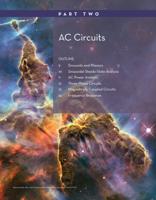
PART 2
AC Circuits366
Chapter 9
Sinusoids and Phasors
367
9.1
Introduction
368
9.2
Sinusoids
369
9.3
Phasors
374
9.4
Phasor Relationships for
Circuit Elements
383
9.5
Impedance and Admiance
385
9.6
Kirchho’s Laws in the Frequency
Domain
387
9.7
Impedance Combinations
388
9.8
Applications
394
9.8.1
Phase-Shifters
9.8.2
AC
Bridges
9.9
Summary
400
Review Questions
401
Problems
401
Comprehensive Problems
409
Chapter 10
Sinusoidal Steady-State
Analysis
411
10.1
Introduction
412
10.2
Nodal Analysis
412
10.3
Mesh Analysis
415
Contents
vii
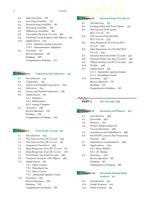
12.11
Summary
541
Review
Questions
541
Problems
542
Comprehensive
Problems
551
Chapter 13
Magnetically Coupled
Circuits
553
13.1
Introduction
554
13.2
Mutual Inductance
555
13.3
Energy in a Coupled Circuit
562
13.4
Linear Transformers
565
13.5
Ideal Transformers
571
13.6
Ideal Autotransformers
579
13.7
Three-Phase Transformers
582
13.8
PSpice
Analysis of Magnetically
Coupled Circuits
584
13.9
Applications
589
13.9.1
Transformer
as
an
Isolation
Device
13.9.2
Transformer
as
a
Matching
Device
13.9.3
Power
Distribution
13.10
Summary
595
Review
Questions
596
Problems
597
Comprehensive
Problems
609
Chapter 14
Frequency Response
611
14.1
Introduction
612
14.2
Transfer Function
612
14.3
The Decibel Scale
615
14.4
Bode Plots
617
14.5
Series Resonance
627
14.6
Parallel Resonance
632
14.7
Passive Filters
635
14.7.1
Low-Pass
Filter
14.7.2
High-Pass
Filter
14.7.3
Band-Pass
Filter
14.7.4
Band-Stop
Filter
14.8
Active Filters
640
14.8.1
First-Order
Low-Pass
Filter
14.8.2
First-Order
High-Pass
Filter
14.8.3
Band-Pass
Filter
14.8.4
Band-Reject
(or
Notch)
Filter
14.9
Scaling
646
14.9.1
Magnitude
Scaling
14.9.2
Frequency
Scaling
14.9.3
Magnitude
and
Frequency
Scaling
10.4
Superposition Theorem
419
10.5
Source Transformation
422
10.6
Thevenin and Norton
Equivalent Circuits
424
10.7
Op Amp AC Circuits
429
10.8
AC Analysis Using
PSpice
431
10.9
Applications
435
10.9.1
Capacitance
Multiplier
10.9.2
Oscillators
10.10
Summary
439
Review
Questions
439
Problems
441
Chapter 11
AC Power Analysis
455
11.1
Introduction
456
11.2
Instantaneous and Average Power
456
11.3
Maximum Average Power Transfer
462
11.4
Eective or RMS Value
465
11.5
Apparent Power and
Power Factor
468
11.6
Complex Power
471
11.7
Conservation of
AC
Power
475
11.8
Power Factor Correction
479
11.9
Applications
481
11.9.1
Power
Measurement
11.9.2
Electricity
Consumption
Cost
11.10
Summary
486
Review Questions
488
Problems
488
Comprehensive Problems
498
Chapter 12
Three-Phase Circuits
501
12.1
Introduction
502
12.2
Balanced Three-Phase Voltages
503
12.3
Balanced Wye-Wye Connection
507
12.4
Balanced Wye-Delta Connection
510
12.5
Balanced Delta-Delta
Connection
512
12.6
Balanced Delta-Wye Connection
514
12.7
Power in a Balanced System
517
12.8
Unbalanced Three-Phase
Systems
523
12.9
PSpice
for Three-Phase Circuits
527
12.10
Applications
532
12.10.1
Three-Phase
Power
Measurement
12.10.2
Residential
Wiring
viii
Contents
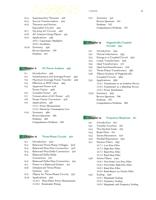
14.10
Frequency Response Using
PSpice
650
14.11
Computation Using
MATLAB
653
14.12
Applications
655
14.12.1
Radio
Receiver
14.12.2
Touch-Tone
Telephone
14.12.3
Crossover
Network
14.13
Summary
661
Review
Questions
662
Problems
663
Comprehensive
Problems
671
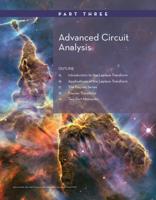
PART 3
Advanced Circuit
Analysis
672
Chapter 15
Introduction to the Laplace
Transform
673
15.1
Introduction
674
15.2
Denition of the Laplace
Transform
675
15.3
Properties of the Laplace
Transform
677
15.4
The Inverse Laplace Transform
688
15.4.1
Simple
Poles
15.4.2
Repeated
Poles
15.4.3
Complex
Poles
15.5
The Convolution Integral
695
15.6
Application to Integrodierential
Equations
703
15.7
Summary
706
Review
Questions
706
Problems
707
Chapter 16
Applications of the Laplace
Transform
713
16.1
Introduction
714
16.2
Circuit Element Models
715
16.3
Circuit Analysis
720
16.4
Transfer Functions
724
16.5
State Variables
728
16.6
Applications
735
16.6.1
Network
Stability
16.6.2
Network
Synthesis
16.7
Summary
743
Review
Questions
744
Problems
745
Comprehensive
Problems
756
Chapter 17
The Fourier Series
757
17.1
Introduction
758
17.2
Trigonometric Fourier Series
759
17.3
Symmetry Considerations
766
17.3.1
Even
Symmetry
17.3.2
Odd
Symmetry
17.3.3
Half-Wave
Symmetry
17.4
Circuit Applications
776
17.5
Average Power and
RMS
Values
780
17.6
Exponential Fourier Series
783
17.7
Fourier Analysis with
PSpice
789
17.7.1
Discrete
Fourier
Transform
17.7.2
Fast
Fourier
Transform
17.8
Applications
795
17.8.1
Spectrum
Analyzers
17.8.2
Filters
17.9
Summary
798
Review
Questions
800
Problems
800
Comprehensive
Problems
809
Chapter 18
Fourier Transform
811
18.1
Introduction
812
18.2
Denition of the Fourier Transform
812
18.3
Properties of the Fourier
Transform
818
18.4
Circuit Applications
831
18.5
Parseval’s Theorem
834
18.6
Comparing the Fourier and
Laplace Transforms
837
18.7
Applications
838
18.7.1
Amplitude
Modulation
18.7.2
Sampling
18.8
Summary
841
Review Questions
842
Problems
843
Comprehensive Problems
849
Chapter 19
Two-Port Networks
851
19.1
Introduction
852
19.2
Impedance Parameters
853
19.3
Admiance Parameters
857
19.4
Hybrid Parameters
860
19.5
Transmission Parameters
865
19.6
Relationships Between
Parameters
870
"
Do you need help?
Call Me Back
"
Do you need help?
Call Me Back